

Why Do Some Caps Fit Better Than Others? | GRACE Journal #009
Category: Design
Reading Time: 5 minutes
Why Do Some Caps Fit Better Than Others?
Two caps can be labeled the same size.
They can both be adjustable.
They can even be made from similar fabrics.
And still, one can feel completely natural on your head while the other somehow feels wrong.
Too tall.
Too shallow.
Too rigid.
Too wide.
The difference is not always size.
Often, it is proportion.
A cap's fit is shaped by several small decisions working together.
Crown height.
Crown depth.
Panel construction.
Structure.
Brim shape.
Curve.
Each one changes how the cap sits, feels, and looks once it is worn.
Fit Is More Than Circumference
When people think about cap fit, they usually think about one measurement.
Head circumference.
That matters.
It determines whether the cap can physically fit around your head.
But it does not determine the whole silhouette.
Two caps made for the same head circumference can sit very differently.
One may rest close to the head.
Another may create more space above it.
One may feel relaxed.
Another may hold a stronger shape.
That is because circumference is only one part of the design.
The rest happens above it.
Headwear manufacturers define different cap shapes through crown height, panel structure, front angle, and bill shape.
Richardson, for example, describes the overall shape of a cap as the combination of exactly those elements.
A cap is not simply a circle with a brim attached.
It is a three-dimensional object.
And small changes to that object matter.
Crown Height Changes the Silhouette
The crown is the main body of the cap.
Its height has a major influence on how the cap looks once it is worn.
A higher crown creates more vertical presence.
A lower crown sits closer to the head and usually feels more understated.
Within the headwear industry, crown profiles are commonly described as low, medium, or high.
But none of them is automatically better.
They simply create different proportions.
Raise the front of the crown slightly and the cap can begin to feel more prominent.
Lower it and the entire silhouette can become quieter.
That is why two caps that look relatively similar on a table can feel completely different once they are on someone's head.
The change may only be a matter of millimeters.
Visually, it can be much more significant.
Depth Matters Too
Height is only one part of the equation.
Depth matters as well.
Crown depth affects how far the cap settles around the head.
A cap can have the correct circumference and still feel too shallow.
It may sit higher than expected.
It may feel as though it never fully settles into place.
A deeper crown can have the opposite effect.
It may sit lower and change the relationship between the brim, eyebrows, and ears.
That is why tightening or loosening the closure cannot solve every fit problem.
The pattern itself matters.
Richardson's own cap-shape system shows this clearly.
Its Low Pro silhouette uses a shallower crown depth, while other shapes use fuller-depth panels to create a different profile.
The adjustment at the back can refine the fit.
It cannot redesign the crown.
Structure Changes How a Cap Sits
Some caps maintain their shape even when nobody is wearing them.
Others naturally soften when placed on a surface.
This is one of the clearest differences between structured and unstructured construction.
Structured caps generally use reinforcement behind the front panels to help the crown hold a more defined shape.
Unstructured caps rely more heavily on the fabric itself.
That allows the crown to follow the wearer's head more naturally.
The difference can be subtle when a cap is photographed alone.
On the head, it becomes much easier to see.
A structured cap can feel sharper.
More architectural.
More deliberate.
An unstructured cap often feels softer.
More relaxed.
More lived-in.
Neither construction is universally better.
They simply create different silhouettes.
The history behind that softer approach is explored further in How the "Unstructured" Cap Became a Style Icon | GRACE Journal #008.
The Brim Is Part of the Fit
The brim may appear separate from the crown.
Visually, it is not.
Its shape changes the balance of the entire cap.
A flatter brim combined with a taller crown can create a stronger silhouette.
A curved brim paired with a lower crown often produces a softer profile.
The curve also changes how the cap frames the face.
That is why manufacturers treat brim shape as part of the cap's overall silhouette.
New Era, for example, differentiates several of its classic models not only through crown height and structure, but also through flat, curved, and semi-curved visors.
Richardson also includes bill curvature as one of the defining characteristics of cap shape.
The brim is not an isolated detail.
It works with the crown.
A small change in one affects the way the other is perceived.
Why the Same Cap Looks Different on Different People
A cap does not exist in isolation.
It interacts with the person wearing it.
Head width.
Head height.
Forehead.
Hair.
Ear position.
Even the angle at which someone naturally wears a cap can change the final silhouette.
This is why the same cap will never look exactly the same on everyone.
A taller crown may feel perfectly balanced on one person and slightly oversized on another.
A shallow cap may look clean and understated on one head while feeling too small on another.
This does not mean there needs to be a complicated rule for every face shape.
Fit is more individual than that.
It is a relationship between the proportions of the cap and the proportions of the person wearing it.
When those proportions work together, the result feels natural.
A Few Millimeters Can Change Everything
Cap design is full of measurements that seem insignificant on their own.
A slightly taller front panel.
A deeper side panel.
A different seam angle.
A softer reinforcement.
A different curve in the brim.
Most people will never consciously identify every one of these details.
But they will often notice the result.
That is the interesting thing about proportion.
When something is slightly off, it can be surprisingly easy to feel.
When everything works together, the design almost disappears.
Nothing looks exaggerated.
Nothing feels distracting.
The cap simply seems to belong.
More Than a Measurement
At first glance, a baseball cap looks remarkably simple.
A crown.
A brim.
A closure.
But simplicity makes proportion more important, not less.
There are fewer elements to hide behind.
Change the height.
Change the depth.
Change the panel construction.
Change the curve of the brim.
And the same basic object develops a completely different personality.
This is also why different cap constructions create such distinct silhouettes.
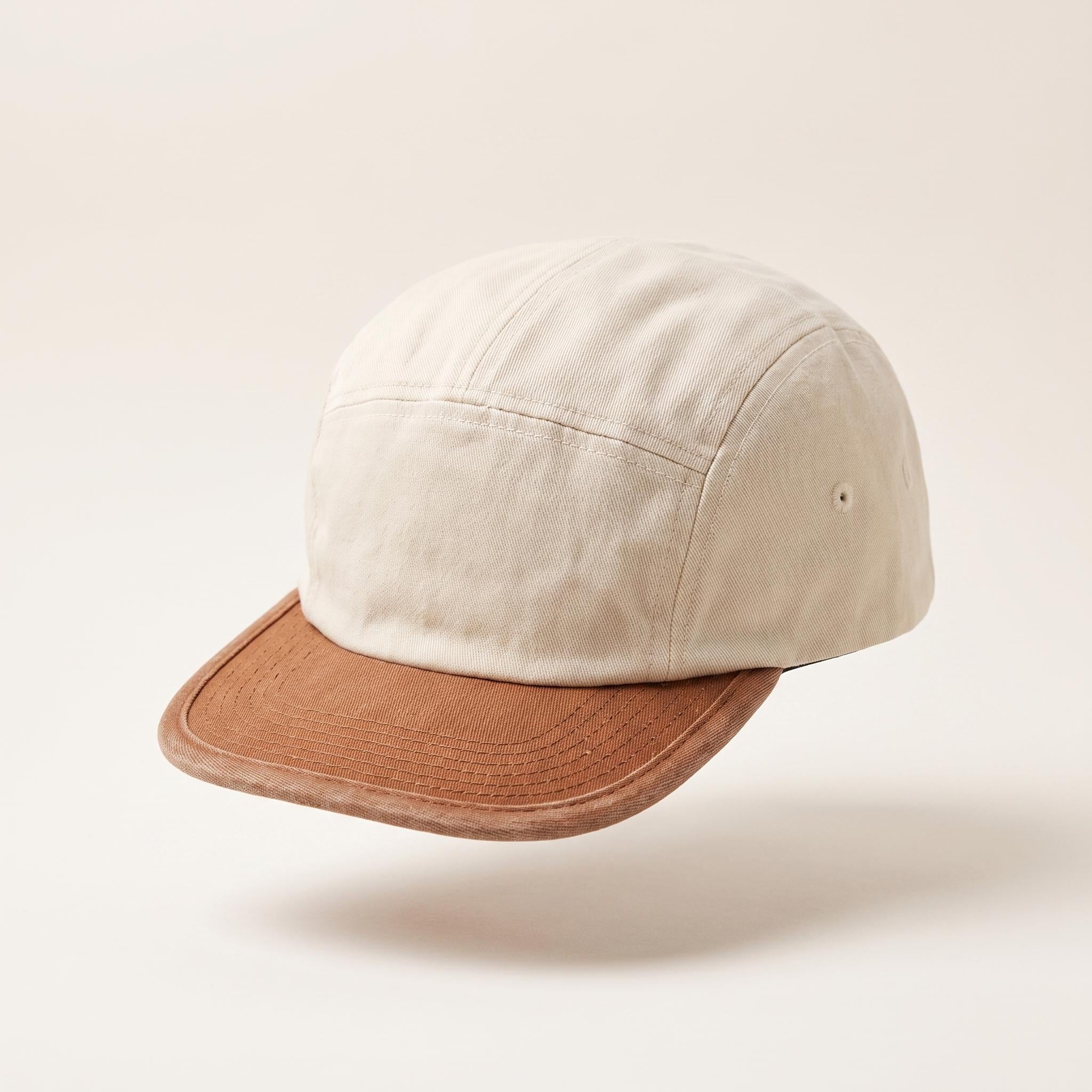
A traditional six-panel baseball cap and a five-panel cap may serve a similar purpose, but the arrangement of their panels changes the way each one sits and looks.
That difference is explored in The History of the Five-Panel Cap | GRACE Journal #005.
Good fit is not created by one perfect number.
It comes from how all of these decisions work together.
Why Proportion Matters to Us
At GRACE, we believe simplicity places more importance on proportion, not less.
When there is no oversized logo competing for attention, the silhouette becomes part of the design itself.
The height of the crown.
The angle of the panels.
The curve of the brim.
The way the cap sits once it is worn.
These details may be subtle.
But subtle does not mean insignificant.
It means they have to work together.
That philosophy can be seen throughout The GRACE Collection, from the familiar proportions of GRACE Classics to the different construction of the GRACE Five-Panel Collection.
The right fit is rarely created by one measurement.
It is created by relationships.
Height.
Depth.
Structure.
Curve.
Proportion.
A good cap does not need to announce any of those decisions.
You simply notice that it feels right.
By The GRACE Editorial Team
Published September 30, 2026
Sources & Further Reading
- Richardson – Hat Shape Guide
- New Era – Find Your Fit: Which New Era Cap Is Right for You?
- Nike Team Headwear – Best Practices Guide
- GRACE Five-Panel Collection
- GRACE Classics
- The GRACE Collection
Blog Card / Excerpt
Discover why two caps with the same size can fit completely differently — and how crown height, depth, structure, and proportion shape the way a cap truly feels. Read GRACE Journal #009.







Leave a comment
This site is protected by hCaptcha and the hCaptcha Privacy Policy and Terms of Service apply.